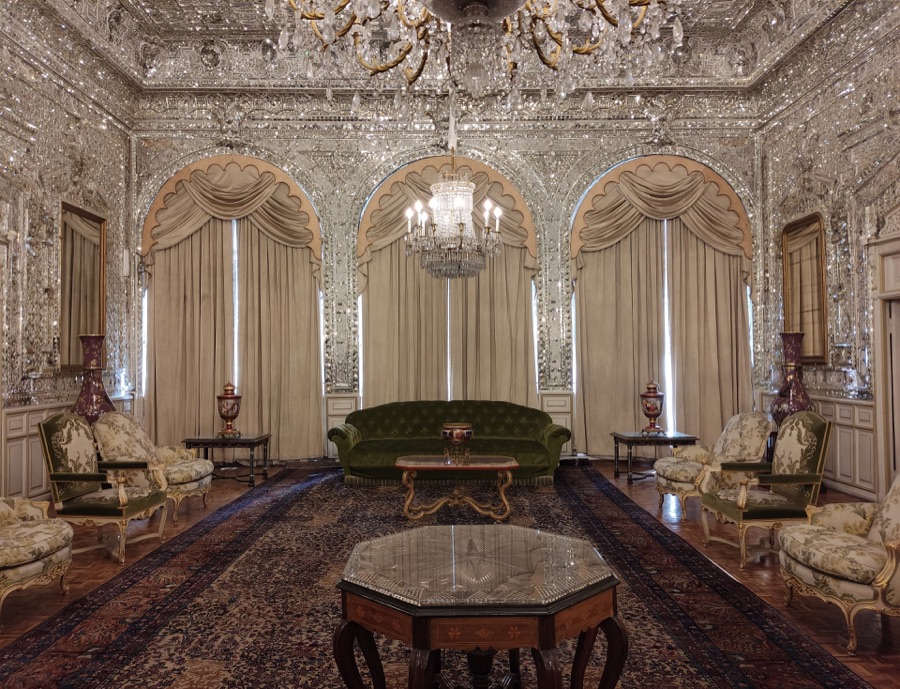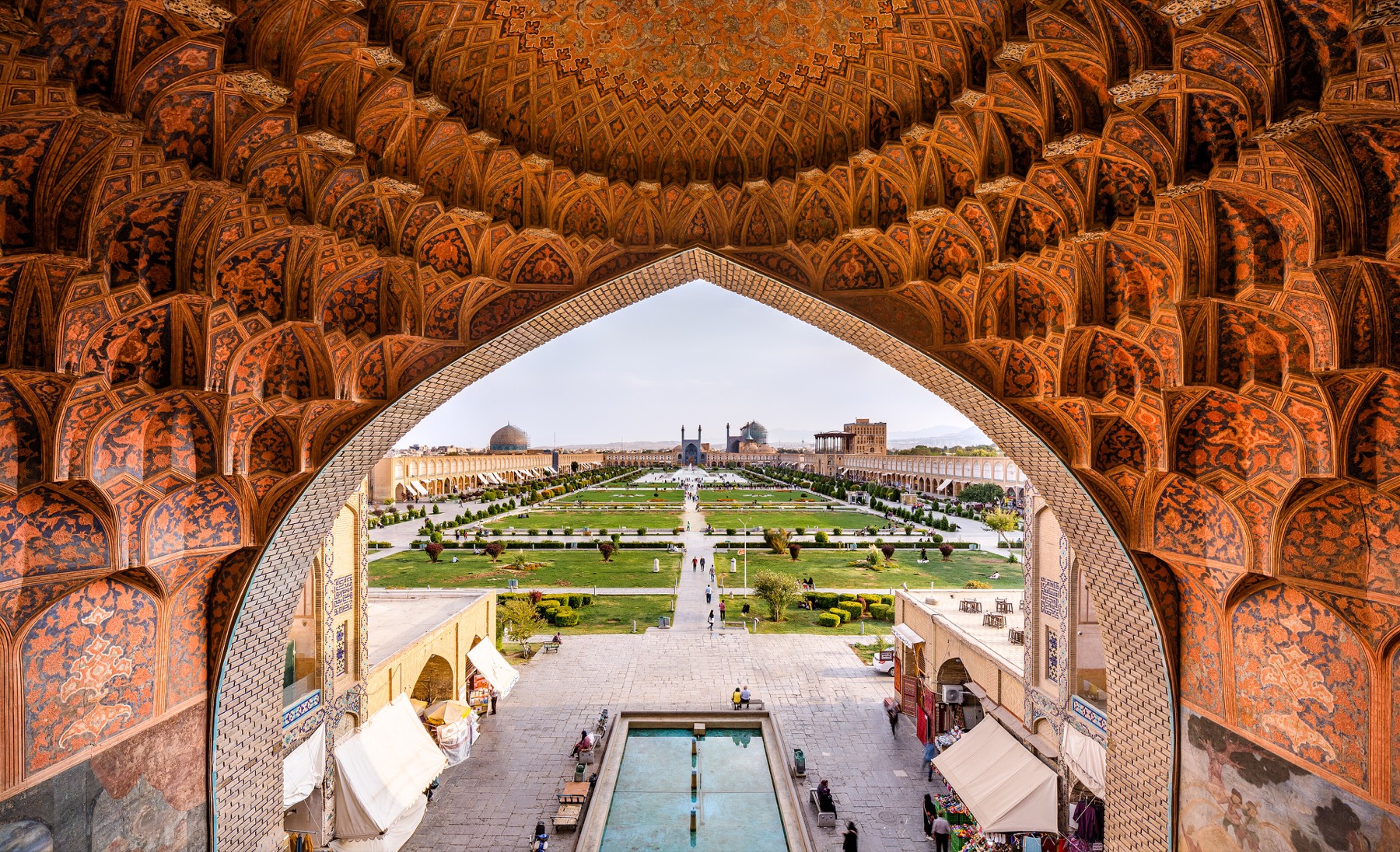
Isfahan has been important at many times, but it was Shah Abbas I who made it his capital around 1598 and shaped the city that visitors know. His planners laid out a great square, a covered bazaar, royal and religious buildings and a long avenue of gardens. A traditional saying calls it “half the world”.
What to see
Naqsh-e Jahan Square. The centre of the city and a UNESCO site. The Shah Mosque, the Sheikh Lotfollah Mosque, the Ali Qapu palace and the bazaar entrance face each other around a long open space. See our guide to A vaulted hall open on one side, usually facing a courtyard; a signature element of Persian architecture., A honeycomb-like system of small niches that lets a vault or dome pass into a wall; common in Islamic-era Persian architecture. and tilework for what to look for.
The Jameh Mosque. An older congregational mosque that shows centuries of building, from early brickwork to Safavid tile. It is also on the UNESCO list.
The bridges. The Si-o-se-pol (“thirty-three arches”) and the Khaju Bridge cross the Zayandeh Rud and were built in the 17th century as both crossings and meeting places. The river is often dry, so ask locally about the season.
Chehel Sotoun. A garden pavilion with a long pool and wall paintings, part of the UNESCO “Persian Garden” listing.
New Julfa. The Armenian quarter, with churches and a cathedral from the 17th century, tells another part of the city’s story.
Good to know
Spring and autumn are the most comfortable seasons. Squares and bridges are especially atmospheric in the evening, when people gather. The bazaar is a good place to see crafts such as metalwork and block-printed textiles.
Naqsh-e Jahan Square was inscribed on the UNESCO World Heritage list in 1979, and the Jameh Mosque of Isfahan in 2012.
A note on water
Isfahan’s relationship with its river has changed. Water shortage, upstream use and drought have affected the Zayandeh Rud and the city’s gardens, a topic worth reading about before a visit.
Before you go
Check your own government’s current travel advice for Iran before planning a trip, as it can change quickly and differs between countries.
Glossary
- iwan
- A vaulted hall open on one side, usually facing a courtyard; a signature element of Persian architecture.
- muqarnas
- A honeycomb-like system of small niches that lets a vault or dome pass into a wall; common in Islamic-era Persian architecture.
Notes and sources
- Stephen P. Blake, Half the World: The Social Architecture of Safavid Isfahan, 1590–1722 (Mazda, 1999).
- Sussan Babaie, Isfahan and Its Palaces (Edinburgh University Press, 2008).
- UNESCO World Heritage Centre, listing pages for Meidan Emam, Isfahan and for the Masjed-e Jame of Isfahan (cite the exact pages when checked).
Image credits
- Amir Pashaei, CC BY-SA 4.0, Source
This article is also available in: Nederlands فارسی