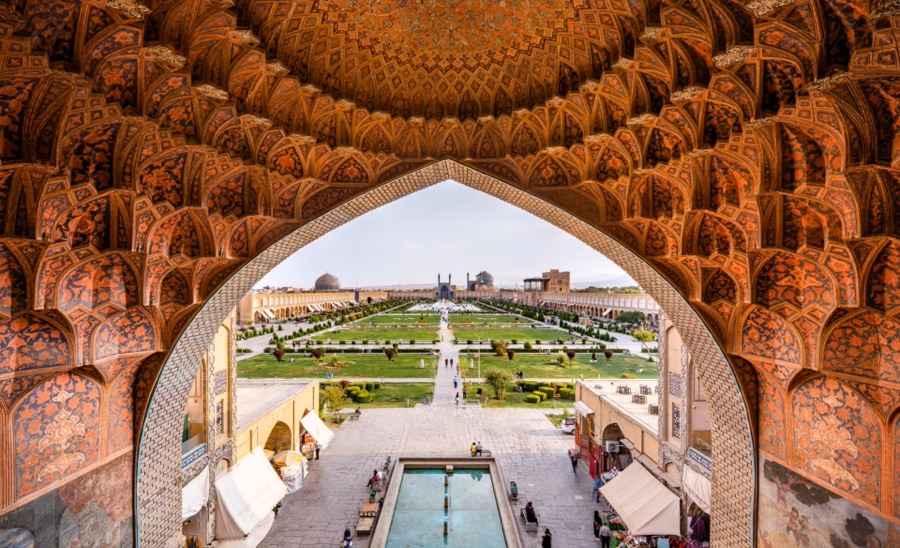
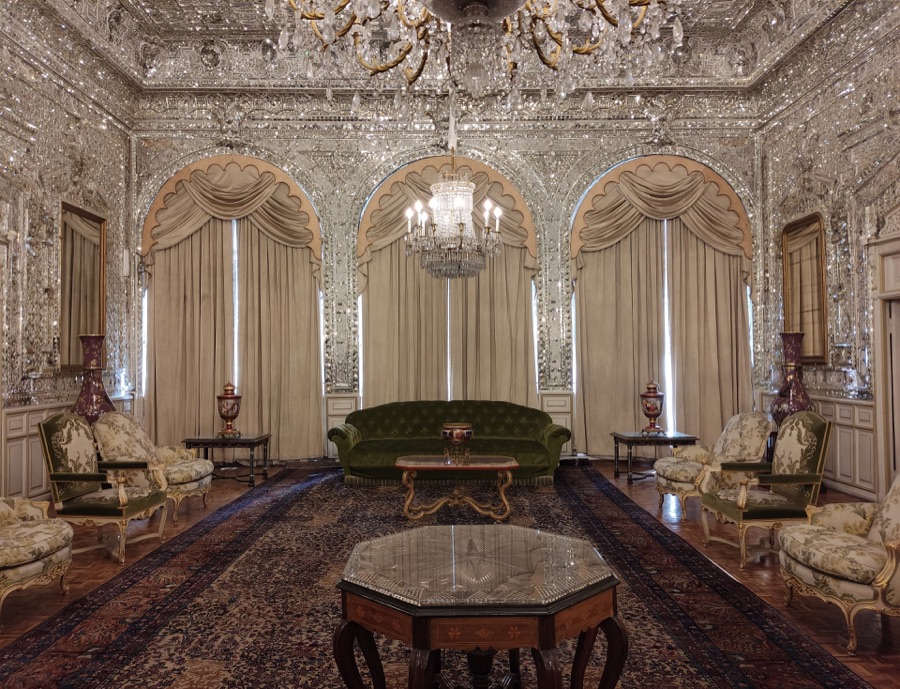
Shiraz is the main city of Fars, the region that gave the Persians their name. It has been a centre of poetry, learning and gardens for a thousand years, and the tombs of two of the greatest Persian poets, Hafez and Saadi, are in the city.
What to see
The poets’ tombs. The Hafezieh, in a garden, is the most visited. Many people come to read poems aloud, and some open a book of Hafez for a fal, a reading for guidance. Saadi’s tomb, the Saadieh, is quieter, with a pool and trees.
The Vakil complex. In the later 18th century, Karim Khan Zand made Shiraz his capital, and the bazaar, mosque and bath that carry his title, Vakil, are among the best-preserved buildings of that time. The mosque’s prayer hall has rows of spiral-fluted columns.
The Nasir al-Molk Mosque. A late 19th-century mosque with a courtyard and prayer hall of coloured glass that casts patterns of light in the early morning, often called the Pink Mosque for its tiles.
Eram Garden. A historic garden with a large pavilion and tall cypresses, part of the UNESCO “Persian Garden” group.
Day trips
Persepolis is about an hour away by road, and nearby Naqsh-e Rustam has royal tombs and Sasanian reliefs. See our article on Persepolis before you go. Pasargadae, the early Achaemenid capital with the tomb traditionally attributed to Cyrus, is a longer trip.
Good to know
Spring brings blossom and the Nowruz season, when the city is busy with travellers. Summer is hot, so many visitors choose to see sites early in the morning.
The tomb at Pasargadae is traditionally identified as that of Cyrus the Great, based on ancient descriptions, but the identification rests on later sources.
Before you go
Check your own government’s current travel advice for Iran before planning a trip, as it can change quickly and differs between countries.
Notes and sources
- Leonard Lewisohn (ed.), Hafiz and the Religion of Love in Classical Persian Poetry (I.B. Tauris, 2010).
- UNESCO World Heritage Centre, 'The Persian Garden' (listing text; cite the exact page when checked).
- Encyclopaedia Iranica, entry 'Shiraz' (iranicaonline.org). Exact entry title and author to be added after the entry is opened.
This article is also available in: Nederlands فارسی