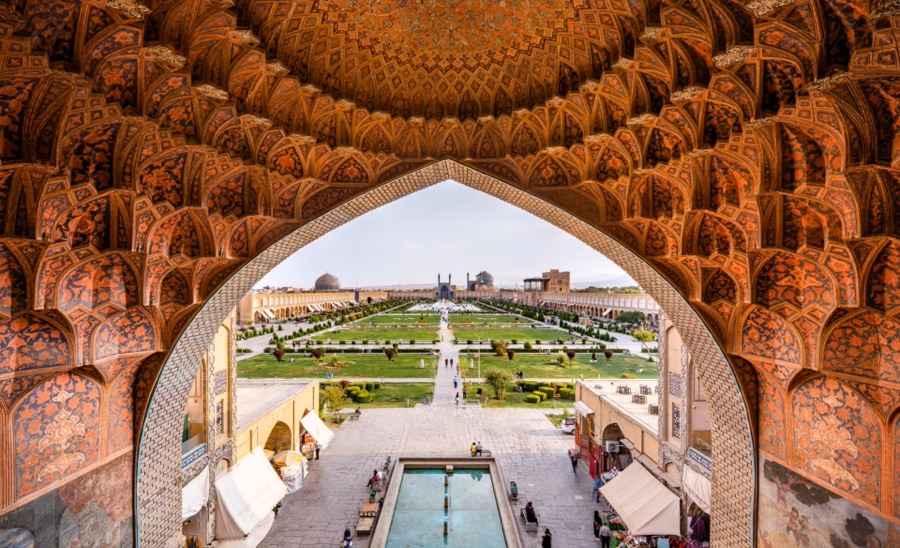
Tehran is the capital of Iran and one of the biggest cities in the region. It became the seat of government under the Qajar dynasty in the late 18th century, and grew rapidly in the 20th. Today it is a sprawling city that rises from the dry plain toward the Alborz mountains, with a mix of old quarters, boulevards, modern towers and neighbourhoods that differ greatly from north to south.
Palaces and museums
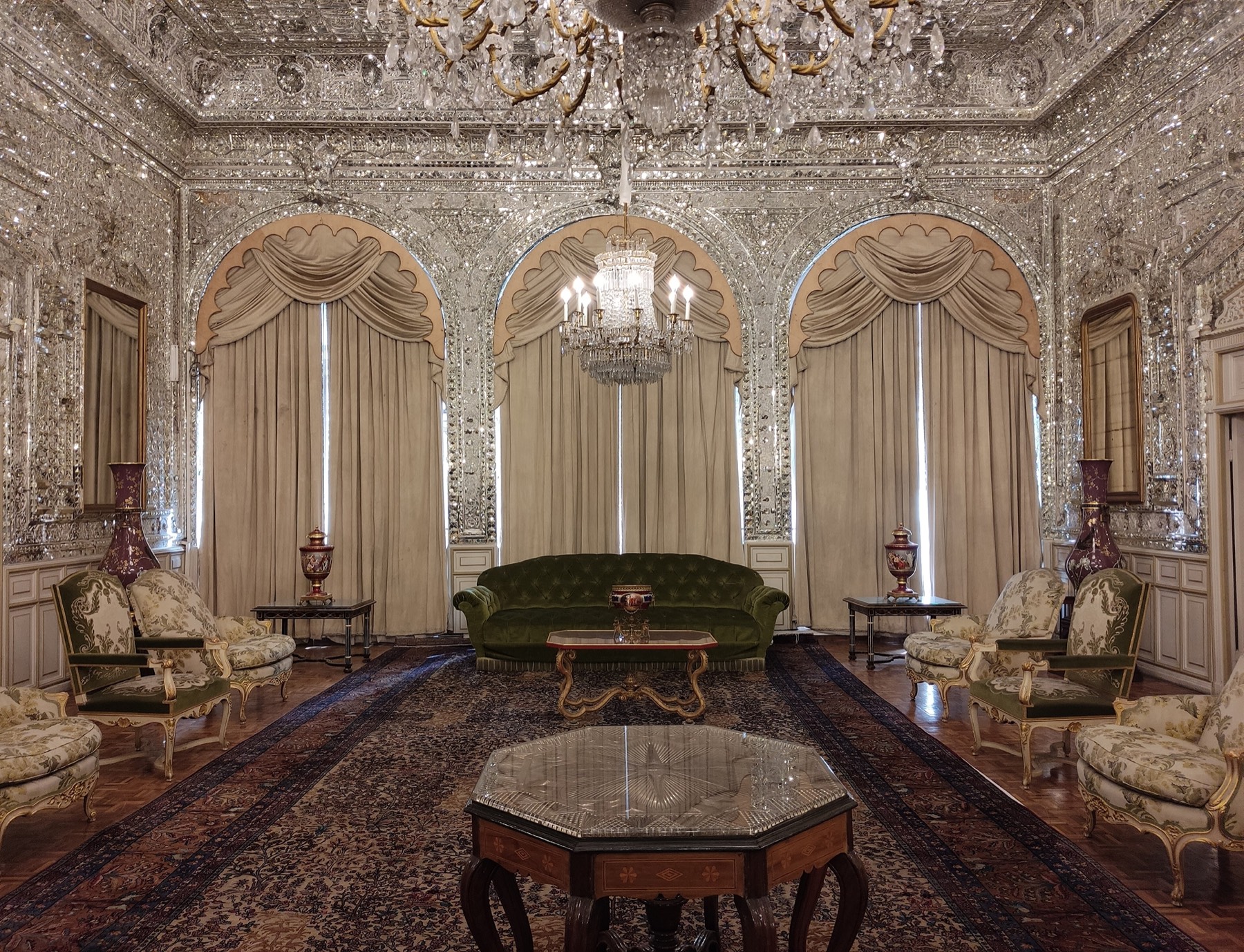
Golestan Palace. The most important historic complex in the city, built in the Qajar period, with courtyards, gardens and rooms decorated with tilework and mirrors. The Mirror Hall, with its glittering surfaces, is the most photographed room. The palace was inscribed on the UNESCO World Heritage list in 2013.
The National Museum of Iran. The place to see the long story of the country, from prehistory to the Islamic period, in one building.
The Carpet Museum. A good introduction to weaving, with examples from across Iran. See our article on carpets for what to look for.
The bazaar and the streets
The Grand Bazaar, near the old centre, is a large network of passages and courtyards with specialist sections. Around it are mosques, old shops and the older core of the city. The metro is a practical way to get around, and many travellers find walking in different districts a good way to feel the city’s variety.
The mountains
In the north, the foothills offer parks, cafés and walking trails, among them Darband, where people meet in the evening for tea and food. A cable car and trails climb toward Mount Tochal. Residents often head up the slopes at weekends.
Contrasts
Tehran is a city of different worlds: the formal and the informal, old and new, the dense south and the leafier north. It also has well-known problems, including traffic and air pollution. A visit rewards curiosity and time spent in more than one neighbourhood.
Golestan Palace was inscribed on the UNESCO World Heritage list in 2013.
Before you go
Check your own government’s current travel advice for Iran before planning a trip, as it can change quickly and differs between countries.
Notes and sources
- UNESCO World Heritage Centre, 'Golestan Palace' (listing text; cite the exact page when checked).
- Encyclopaedia Iranica, entry 'Tehran' (iranicaonline.org). Exact entry title and author to be added after the entry is opened.
Image credits
- Parsa 2au, CC BY-SA 4.0, Source
This article is also available in: Nederlands فارسی