In brief. Zoroastrianism is an ancient Iranian religion centred on Ahura Mazda and on a choice between truth and falsehood. It was influential in the Achaemenid and Sasanian periods, and communities survive in Iran and abroad.
The prophet Zarathustra, known in Greek as Zoroaster, is the central figure of Zoroastrianism. Texts attributed to him, the Gathas, are hymns in an old Iranian language and are the oldest part of the Avesta, the sacred collection of the tradition. The Gathas speak of a god of wisdom, Ahura Mazda, and of a world in which every person chooses between truth, asha, and falsehood.
When and where Zarathustra lived is unsettled. Proposals range from about 1500 to 1000 BCE to the 6th century BCE, and the debate depends on how old the language of the Gathas is judged to be.
In the empires
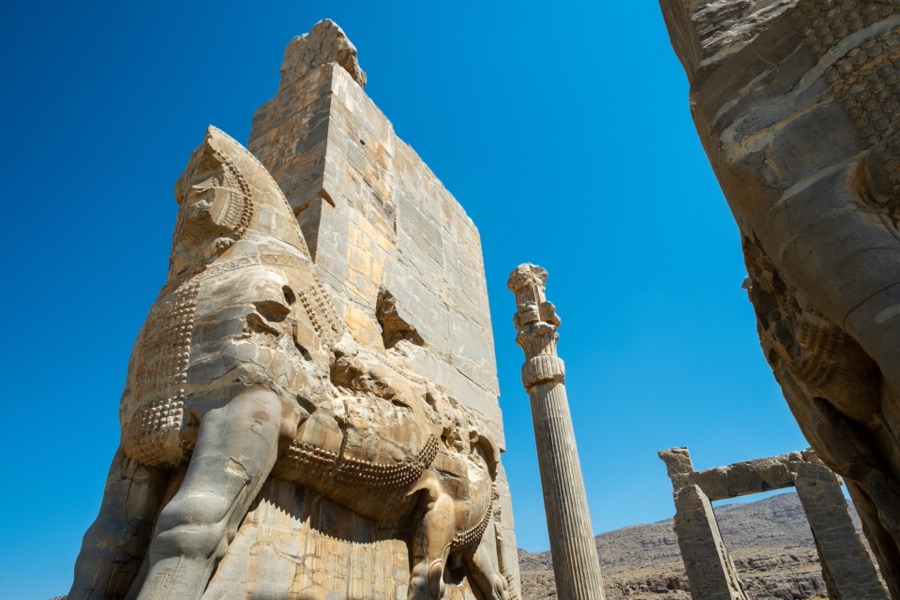
Achaemenid kings invoke Ahura Mazda in their inscriptions, including the Bisotun text. Whether the early kings were Zoroastrians in the sense of later tradition, or followed related Iranian religious practice, is discussed by scholars. Under the Sasanians, in the 3rd to 7th centuries CE, the religion had an organised priesthood and a closer link to the state, and the Avesta was written down in its own alphabet.
Many features of Zoroastrian practice we know today come from the Sasanian period and later priestly writings. It is not always possible to project them back to the earliest centuries.
Practice and symbols
Zoroastrians show respect for the elements, and fire is a sign of purity and the presence of the divine, which is why fire temples are central. People pray facing a source of light. The faith has seasonal festivals, among them Nowruz, which many Iranians of all backgrounds celebrate today, and Mehregan in autumn.
After the Arab conquest
After the Arab conquest of the 7th century, most people in Iran converted to Islam over several centuries. Zoroastrian communities remained, especially in central Iran around Yazd and Kerman, and some families migrated to India, where their descendants are known as Parsis. Today Zoroastrians are a small minority in Iran, recognised in the constitution as one of the religious minorities.
Why it matters for Persian culture
The language of light and of order, the symbolism of the new year, and many story elements of the Shahnameh draw on Iranian traditions older than Islam. Zoroastrian heritage is a part of the cultural memory shared by Iranians, whatever their beliefs today. Yazd, with its fire temple and its old city of mud-brick, is the best place to encounter the living community.
Notes and sources
- Mary Boyce, Zoroastrians: Their Religious Beliefs and Practices (Routledge, 1979) (some of Boyce's dating is debated).
- Josef Wiesehöfer, Ancient Persia from 550 BC to 650 AD (I.B. Tauris, 1996).
- Touraj Daryaee, Sasanian Persia: The Rise and Fall of an Empire (I.B. Tauris, 2009).
This article is also available in: Nederlands فارسی