Tahdig: the crisp golden crust of Persian rice
Ingredients
- 2 cups (400 g) basmati rice
- 2 tablespoons salt for the boiling water, plus a little for the rice
- 3 tablespoons neutral oil or ghee, plus a knob of butter if you like
- 2 tablespoons plain yoghurt (optional, for a richer crust)
- A large pinch of saffron threads, ground and steeped in 3 tablespoons hot water
Method
- Rinse the rice in several changes of cold water until the water runs almost clear. Soak it in salted water for 30 minutes if you have time, then drain.
- Bring a large pot of water with the salt to the boil. Add the rice and boil for 6 to 8 minutes, until the grains are soft outside and still firm in the middle. Drain and rinse briefly with lukewarm water.
- Heat the oil in a non-stick pot over medium heat with 2 tablespoons of water. Mix about a cup of the rice with the yoghurt and a spoonful of the saffron water, and spread it over the bottom of the pot.
- Pile the rest of the rice on top in a cone, and poke a few holes down to the bottom with the handle of a spoon. Drizzle the remaining saffron water over the top.
- Wrap the lid in a clean tea towel and cover the pot. Cook over medium heat for 10 minutes, until you see steam, then lower the heat and cook for 40 minutes without lifting the lid.
- Take the pot off the heat and stand it in a sink with 2 cm of cold water for a minute. This loosens the crust.
- Spoon the white rice onto a plate. Turn the pot over onto a board and lift it off. Break the golden crust into pieces and serve them with the rice.
The crisp, golden crust of rice from the bottom of the pot, served at the Persian table. means “bottom of the pot”. The crust that forms at the base of a pot of rice is a point of pride for cooks and a prize for guests; at many tables there is a polite argument over who gets a piece.
Why it works
The rice is first boiled and drained, then steamed. A layer of fat at the bottom of the pot fries the grains against the metal while steam cooks the rice above, and the cloth under the lid catches condensation so the rice does not become wet. The yoghurt in the base layer gives a thicker, more golden crust.
Variations
Cooks line the pot with thin slices of potato, flatbread or lettuce leaves instead of a rice base. Potato tahdig is a common choice and is easy to release in one piece. Other versions add herbs, barberries or dried fruit.
Serving
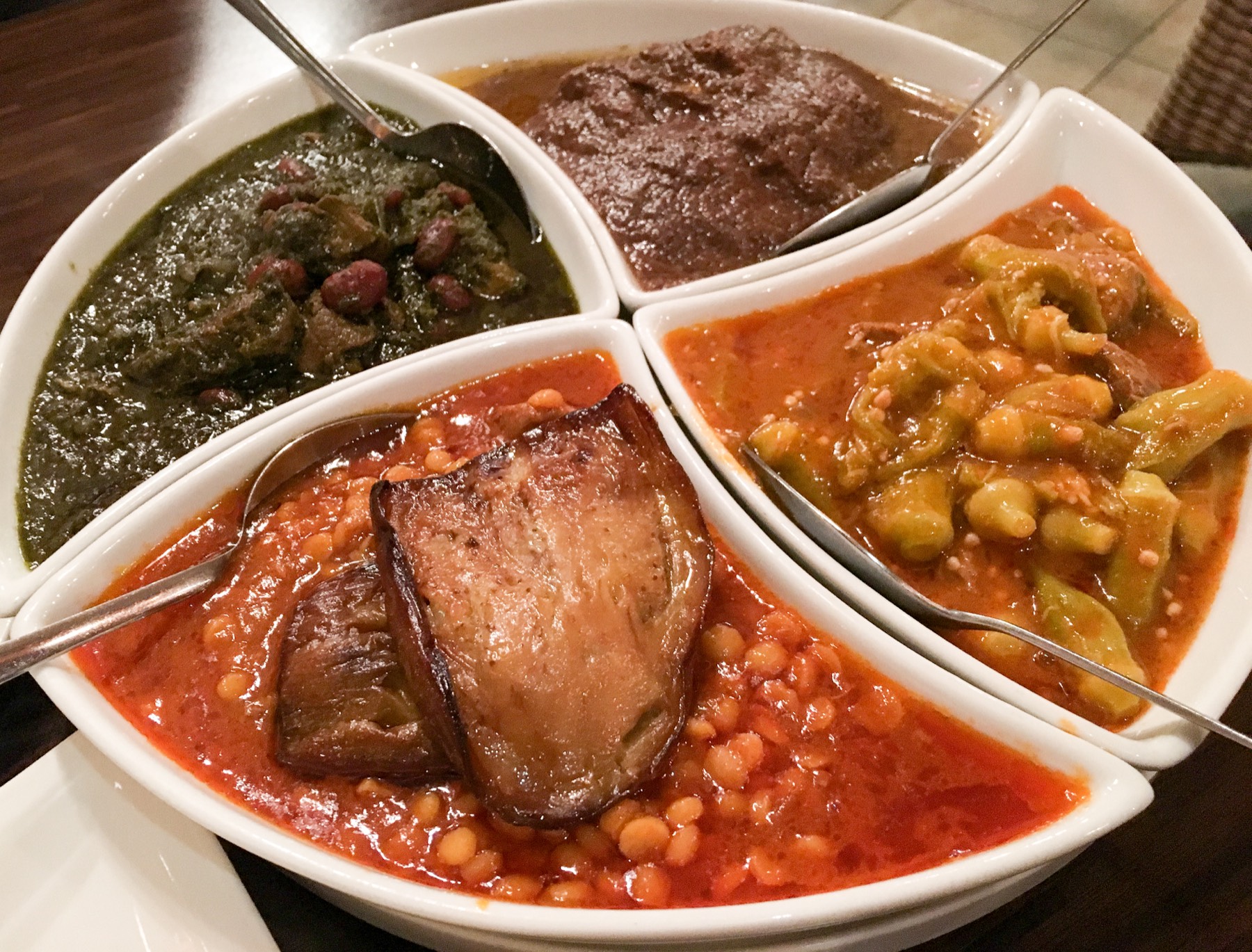
Tahdig is served with stews such as ghormeh sabzi, with kebab, or on its own with yoghurt and pickles. Offer it to guests first.
Glossary
- tahdig
- The crisp, golden crust of rice from the bottom of the pot, served at the Persian table.
Notes and sources
- Najmieh Batmanglij, Food of Life (Mage, 1986) (compare the method and quantities against her tahdig recipes).
Image credits
- Alice Wiegand, CC BY-SA 4.0, Source

This article is also available in: Nederlands فارسی